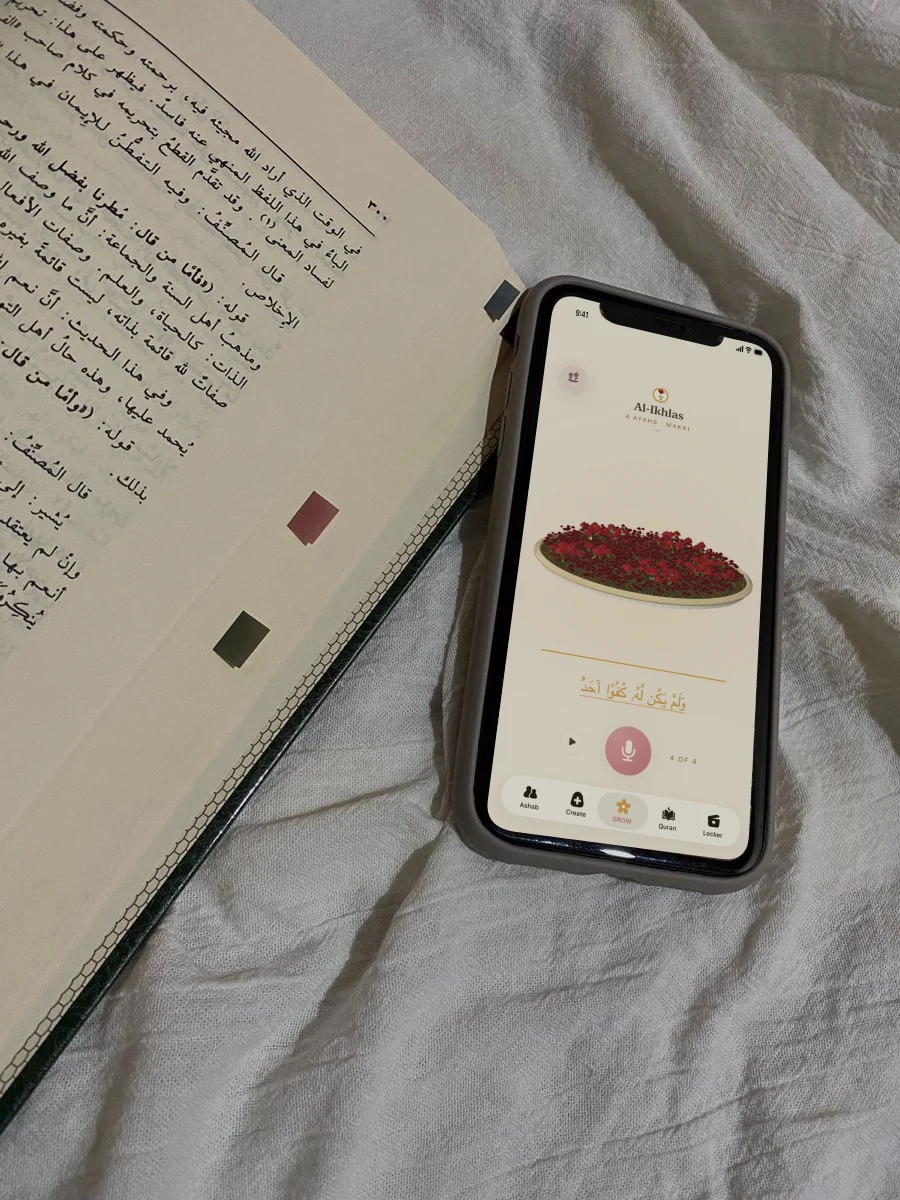
Let one color do the talking
Our palette for this issue is deliberately small: cream to give everything air, olive to ground it, and oxblood for the detail you notice first. Treat it as a suggestion, not a uniform.
For an outfit, try a cream knit or shirt with a long olive layer, then add a burgundy bag or scarf if you already have one. Or turn the balance around: a deeper-toned outer layer with a quiet cream base. You do not need equal amounts of all three colors.
Texture is where it gets interesting
Matte cotton next to a soft knit, a smooth bag against a wool coat, a crisp cuff under an easy sleeve. A small palette lets those differences show instead of making every piece compete.
Check the practical details in daylight: comfort, opacity, how the layers move, and whether the fabric feels good after more than five minutes. Something can look lovely in a photograph and still be annoying to wear. Choose the version you want to keep on.
The room can borrow the palette
A cream throw, a green cushion, a small burgundy notebook. The same idea works on a bedside table or a reading corner without turning the whole room into a set.
Put the colors next to what is already there. Warm wood may be enough of an accent. Gray bedding may only need a softer light. If the space is comfortable and works for you, there is no missing purchase to solve.
Before you buy anything
Lay out a few pieces you already own. Try two combinations. Take a quick photograph in natural light so you can see the proportions, then wear the one that feels like you.
This is an editorial mood, not a list of this season's mandatory purchases. The most useful palette is one that makes getting dressed a little easier, not one that turns your wardrobe into homework.